Battery 206 (Nahant, MA)
Perched on the rugged cliffs of East Point in Nahant, Massachusetts, the haunting remains of Battery 206 stand as a silent relic of World War II coastal defense.

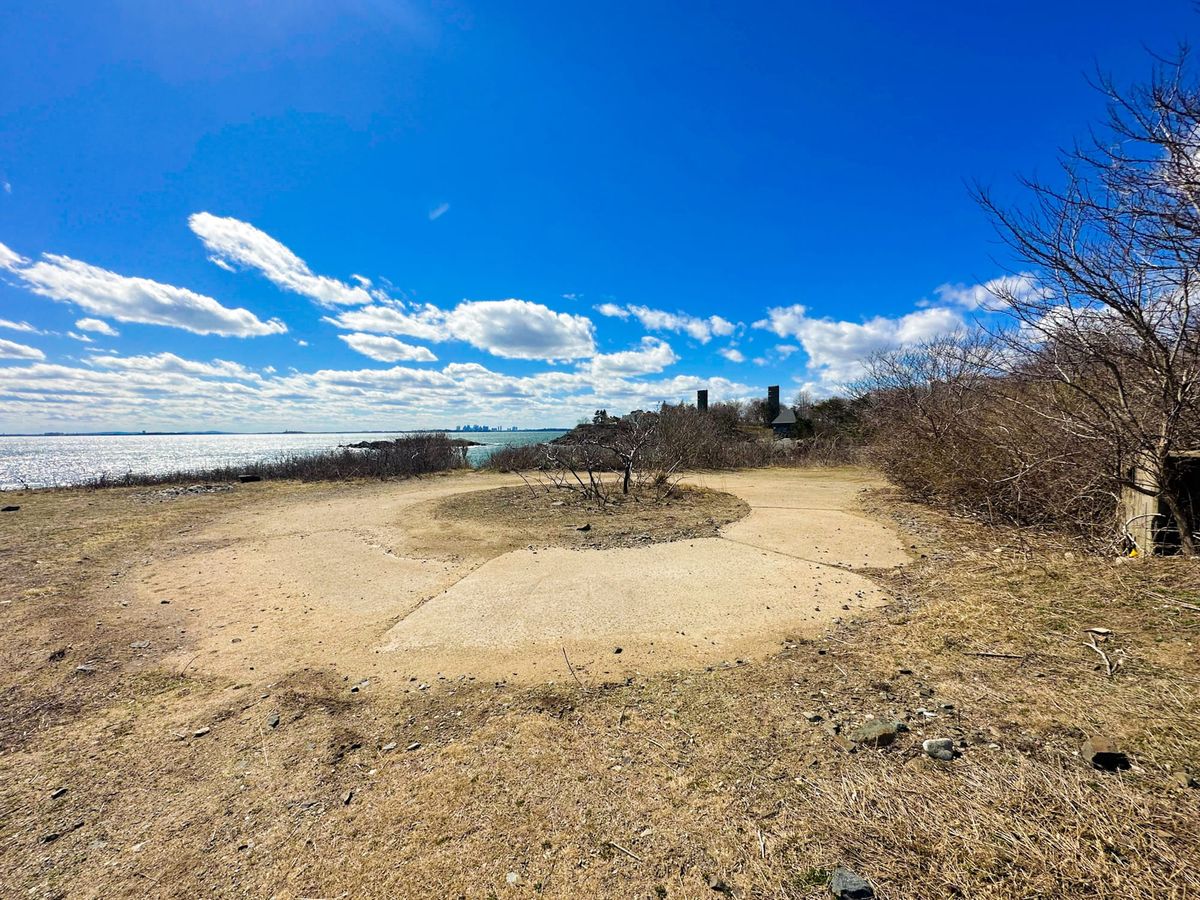
Perched on the rugged cliffs of East Point in Nahant, Massachusetts, the haunting remains of Battery 206 stand as a silent relic of World War II coastal defense. Once armed with massive 6-inch naval guns designed to protect Boston Harbor from enemy ships, this abandoned fortification now lies hidden within the scenic seaside paths of Lodge Park, its concrete walls slowly being reclaimed by nature and the sea breeze.
Battery 206 Establishment
The origins of Battery 206 trace back to World War II, when the U.S. government dramatically expanded its coastal defense network to guard against potential enemy attacks. The East Point Military Reservation, originally established in 1917 during World War I, became an ideal location for new fortifications.
As older Endicott-era defenses like Battery Gardner became obsolete, the Army began constructing more modern emplacements with improved firepower and protection. In 1942, funding was approved to build Battery 206, and construction commenced soon after. By 1943, the concrete structure was completed and transferred to the U.S. Army Coast Artillery Corps for operation.
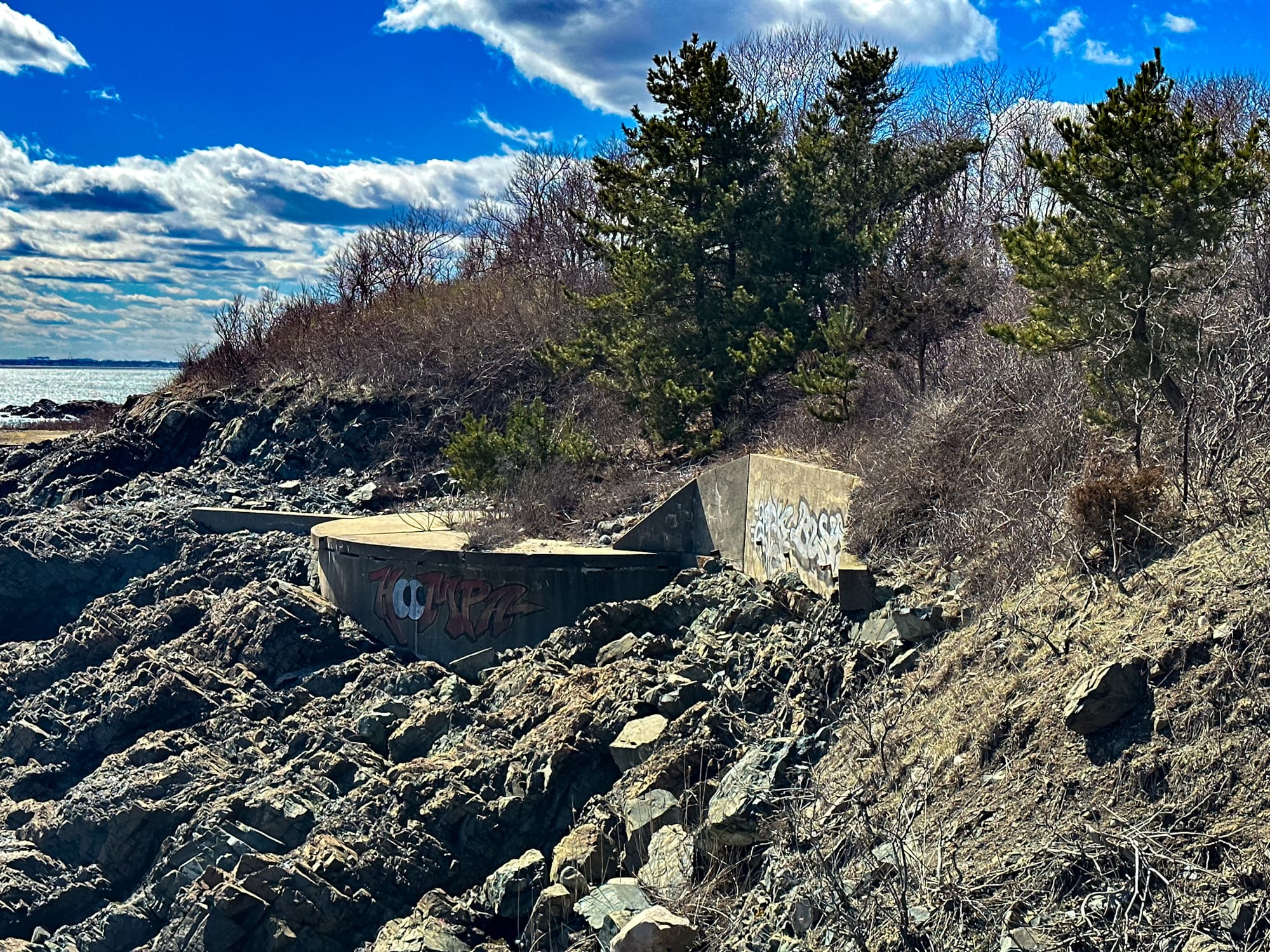
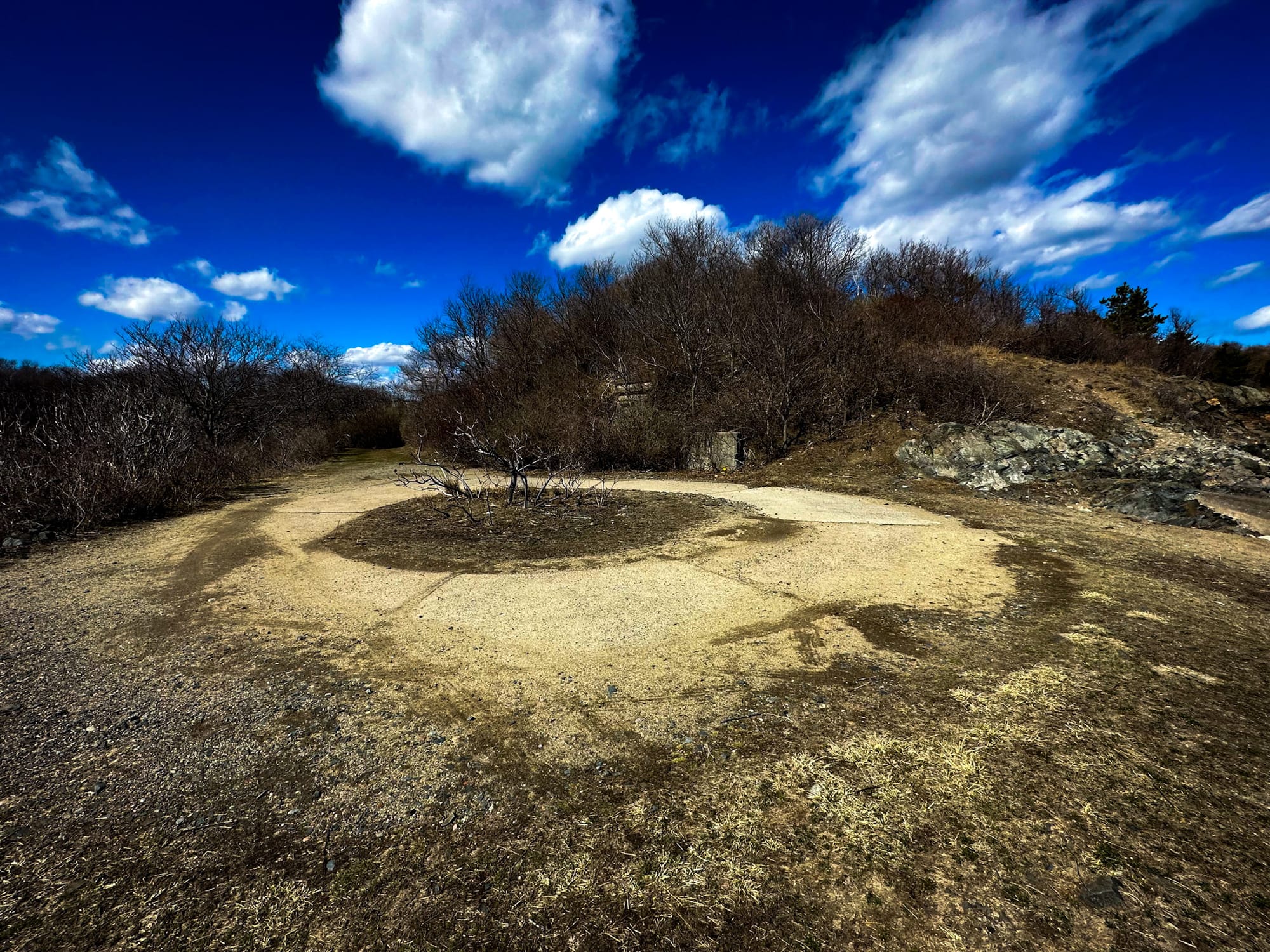
Battery 206 featured two 6-inch M1903A2 rapid-fire guns, each mounted on M1 Shielded Barbette Carriages. The layout consisted of two open circular gun emplacements flanking a large, earth-covered central magazine and support area, which stored ammunition and housed the battery’s crew. The entire design was built to blend into the natural terrain, minimizing visibility from sea or air.
Each gun was capable of firing 105-pound armor-piercing shells at a rate of five rounds per minute, reaching targets up to 15 miles offshore — enough to strike enemy destroyers or submarines attempting to approach Boston Harbor.
Alongside nearby Battery Murphy (Battery 104), Battery 206 formed a key part of the Harbor Defenses of Boston, complementing other installations at Fort Ruckman, Fort Dawes, and Fort Strong.
Decommissioning and Abandonment
With the end of World War II and the rise of modern missile technology, the coastal defense system that once ringed New England’s shores became obsolete almost overnight.
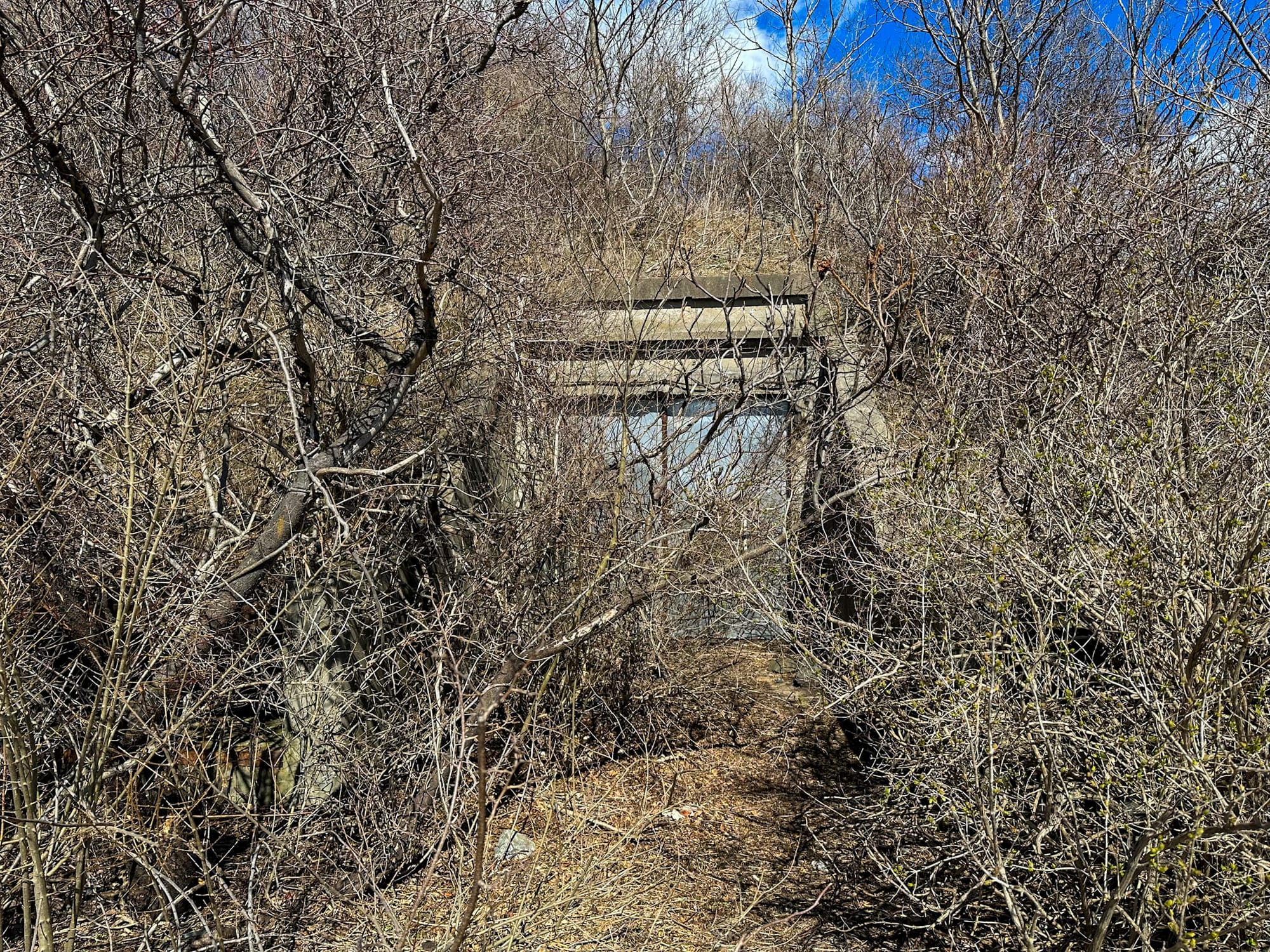
In 1948, Battery 206 was officially deactivated. The massive 6-inch guns and their mounts were removed and sent to storage depots or scrap facilities. The entrances to the magazine and support tunnels were sealed off, and the site was left to the elements.
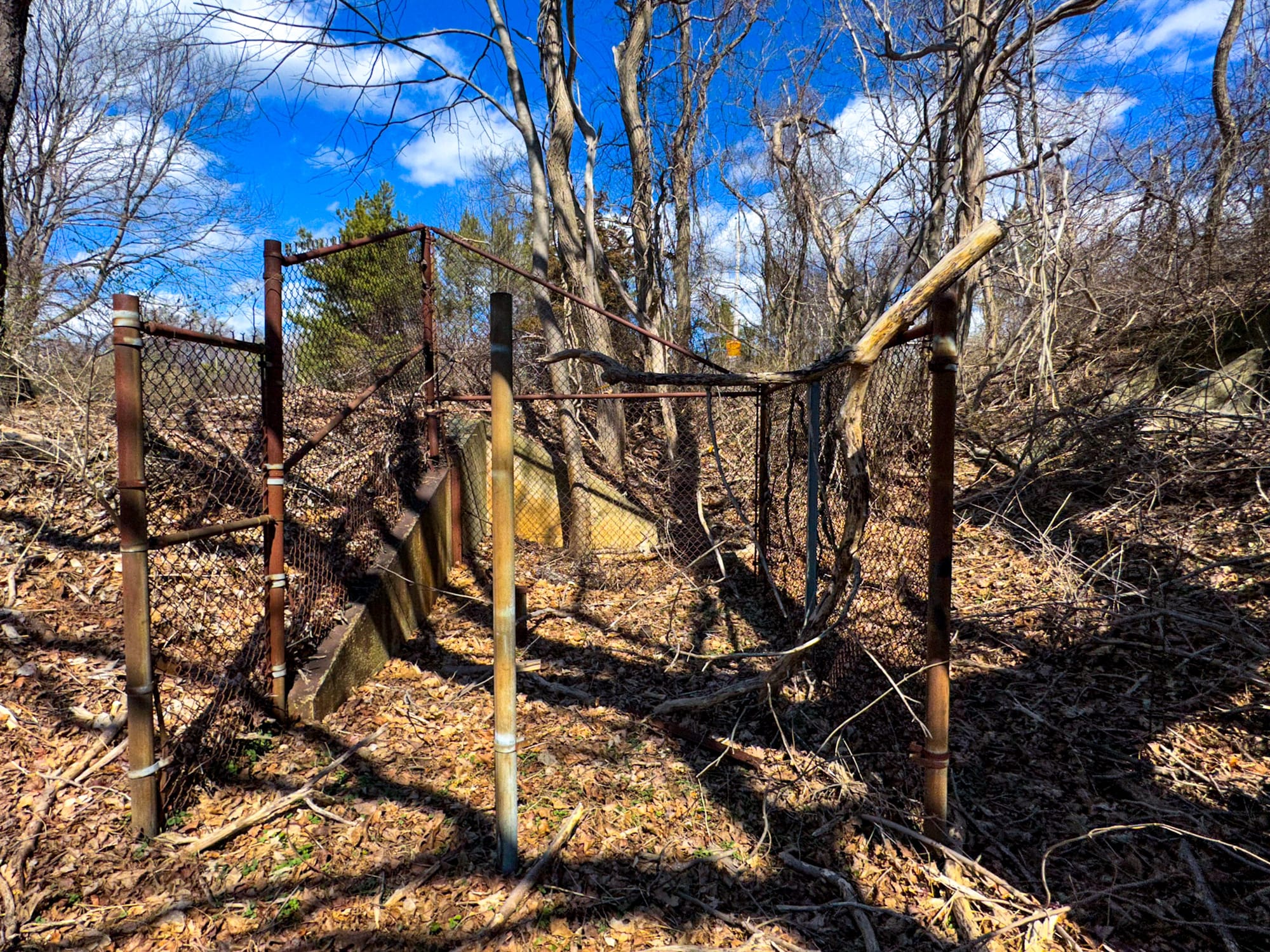
Over the ensuing decades, the structure fell into disrepair. Salt air, storms, and encroaching vegetation slowly took their toll, but the solid concrete construction ensured that Battery 206 would never fully disappear.
What Remains Today
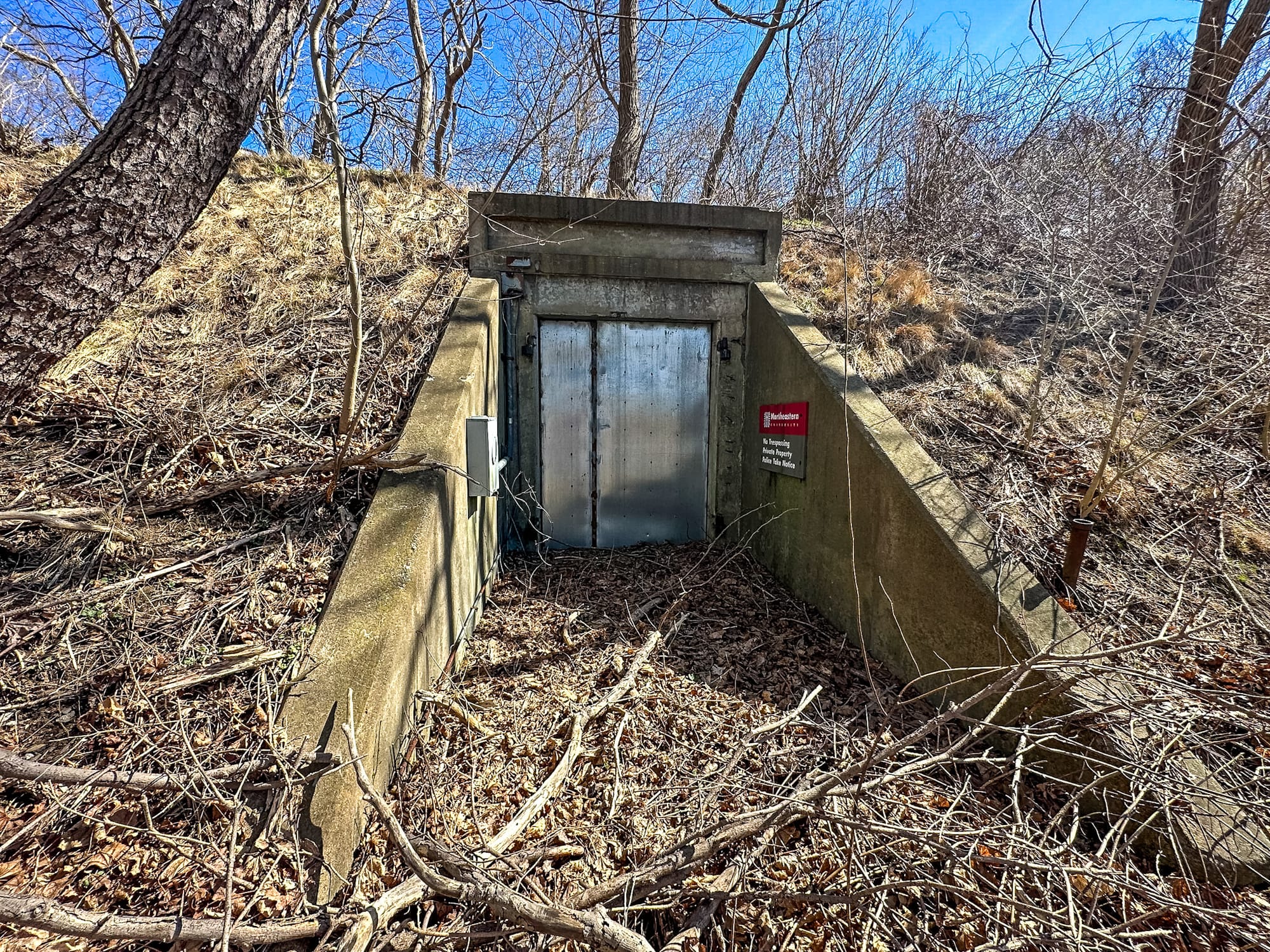
Today, Battery 206 sits quietly on the southern coast of Lodge Park, offering both history and breathtaking views of the Atlantic Ocean. The main bunker remains sealed, its heavy steel doors now boarded up, but visitors can still walk around the outer structure and imagine the roar of its long-silent guns.
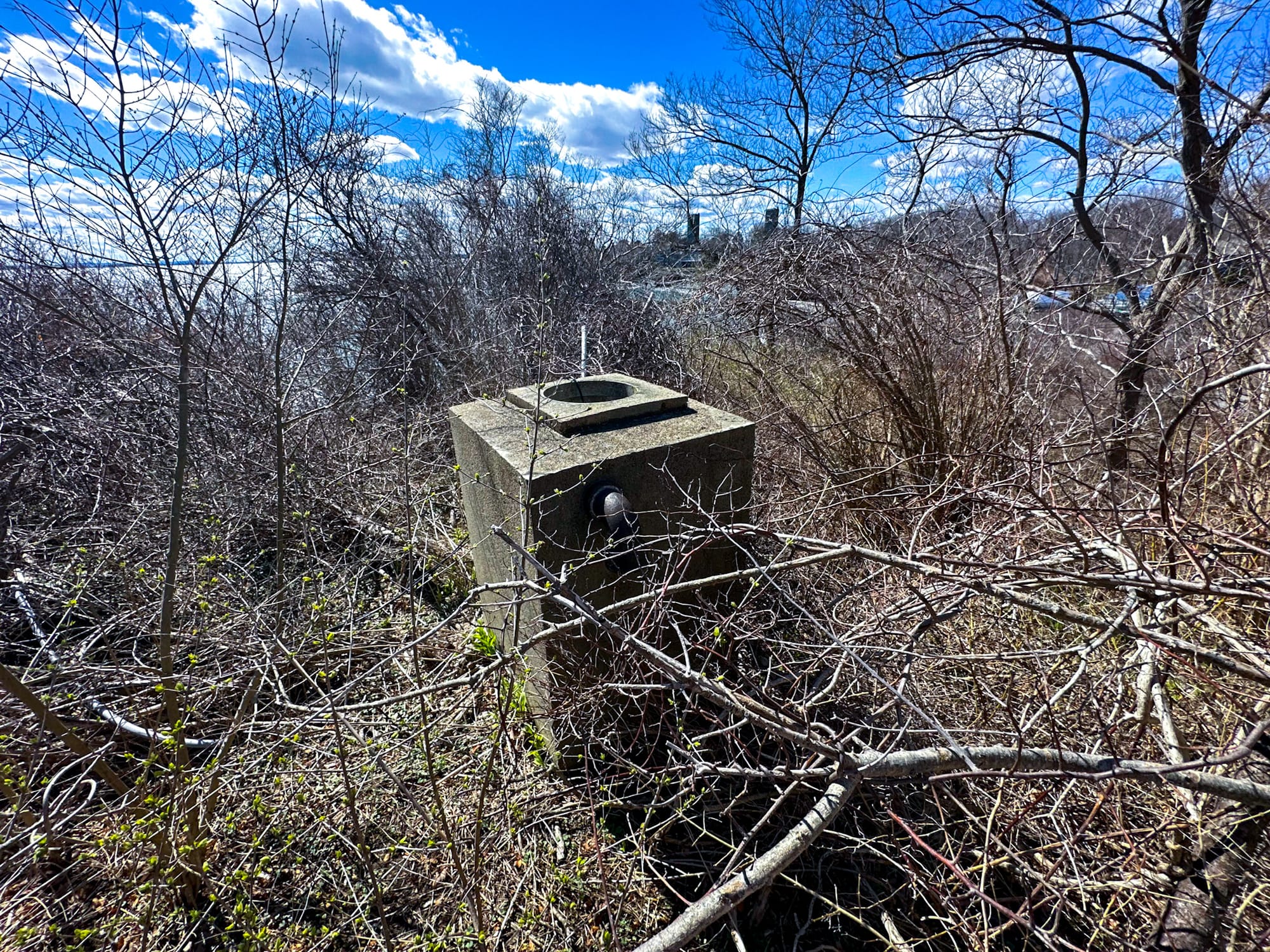
The western gun emplacement is accessible and provides panoramic views across Nahant Bay toward the Boston skyline, while the eastern emplacement can be viewed from a distance. Remnants of ventilation shafts and concrete access points can still be spotted among the grass-covered dunes.
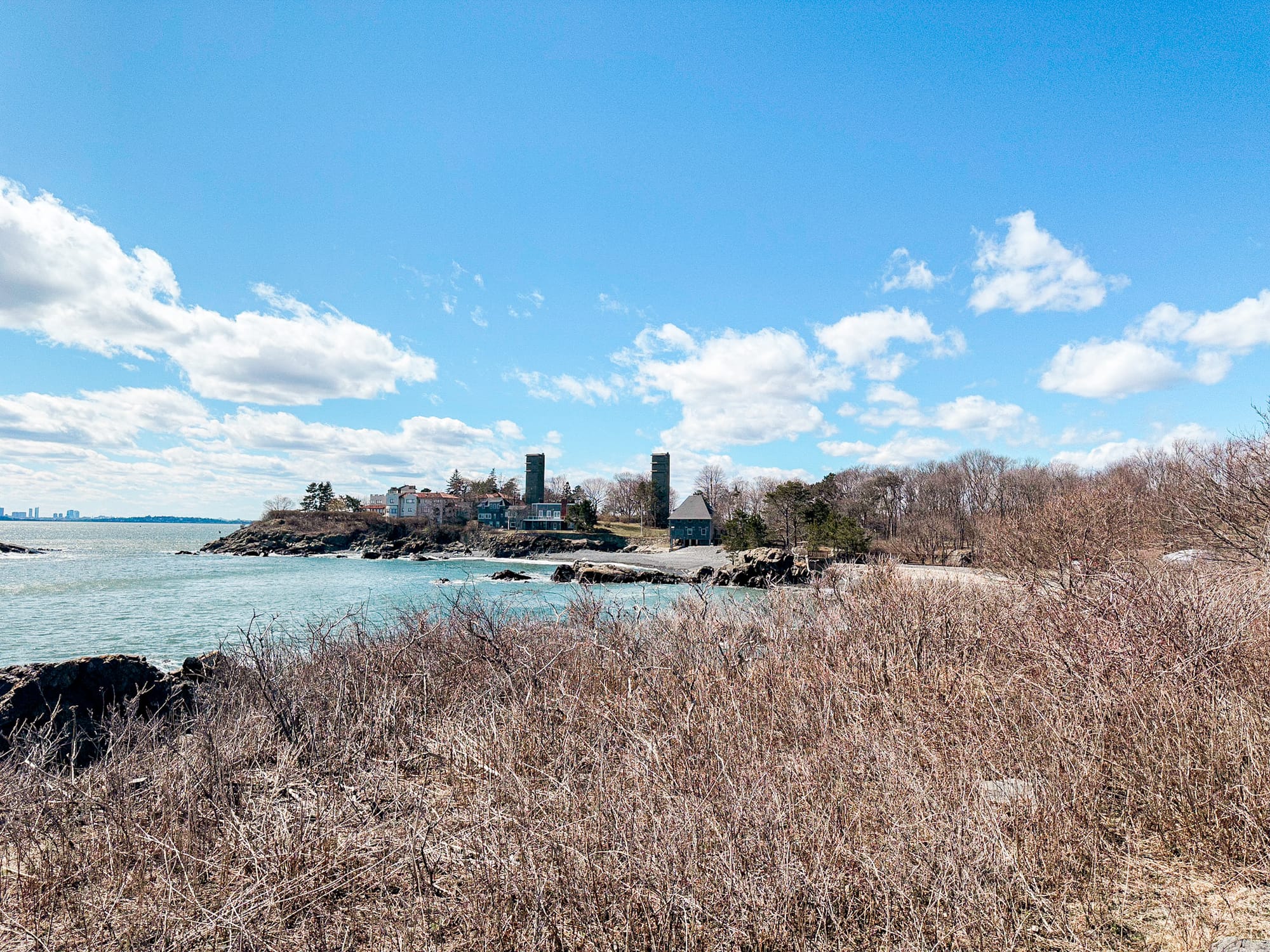
Nearby, the Nahant Fire Control Towers stand watch over the coastline — additional reminders of the area’s wartime role. The juxtaposition of crumbling fortifications and stunning ocean scenery makes Battery 206 one of the most evocative military ruins in Massachusetts.
Visiting Battery 206
- 📍 Address: Nahant Road, Nahant, Massachusetts
- 🌐 GPS Coordinates: 42.417111, -70.906194
- 🅿️ Parking: There are approximately five parking spaces at the entrance to Lodge Park, but these are restricted to Nahant residents with town permits.
- Visitors can park for free for 30 minutes at the Nahant Public Library on Pleasant Street and walk approximately 10–15 minutes to the park.
- 🥾 Access: The trail to the battery is short and easy, leading directly along the coastline. Expect uneven ground and occasional overgrowth near the ruins.
- 🕒 Hours: Open daily from sunrise to sunset.
- 🐾 Dogs: Allowed on leash.
- ⚠️ Note: The interior of Battery 206 is sealed and unsafe to enter — exploration should be limited to exterior paths and viewpoints.
Quick Facts
- 🏗 Construction Began: 1942
- 🧱 Completed: 1943
- 🧍♂️ Operator: U.S. Army Coast Artillery Corps
- 🔫 Armament: Two 6-inch M1903A2 guns on M1 Shielded Barbette Carriages
- 💣 Projectile Weight: 105 pounds
- 📏 Range: 15 miles
- 🔚 Decommissioned: 1948
- 🌊 Current Status: Abandoned; open space within Lodge Park
Final Thoughts
Battery 206 offers an extraordinary blend of military history and natural beauty. Once an integral part of Boston Harbor’s World War II defense system, it now stands as a peaceful — yet powerful — reminder of a time when the Massachusetts coast bristled with guns, bunkers, and watchtowers.
Whether you’re a history enthusiast, photographer, or coastal explorer, a visit to Battery 206 is a journey into both the past and the landscape itself — where the echoes of war meet the tranquility of the sea.