Battery Barton (New Bedford, MA)
Tucked within the scenic Fort Taber Park along New Bedford’s southern coastline stands the abandoned Battery Barton, a relic of America’s early coastal defense era.

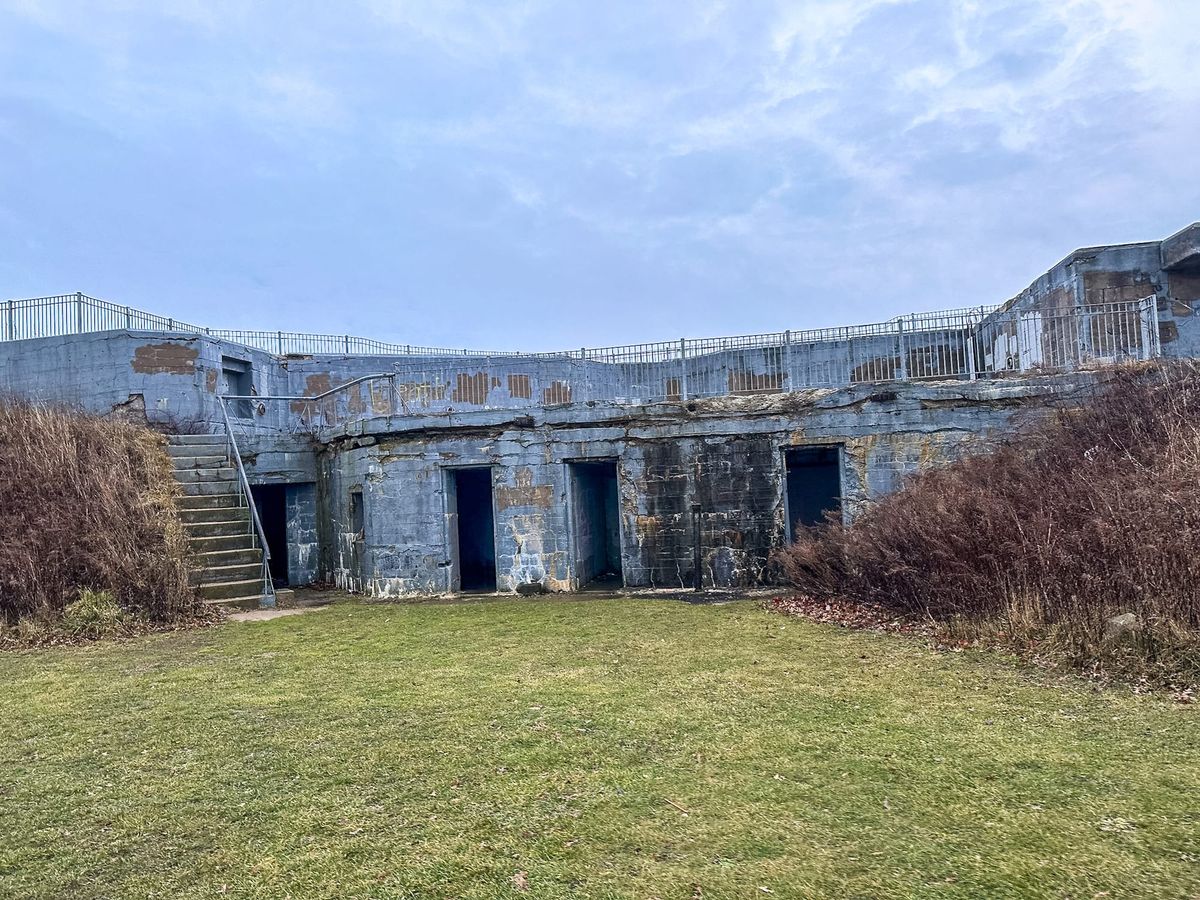
Tucked within the scenic Fort Taber Park along New Bedford’s southern coastline stands the abandoned Battery Barton, a relic of America’s early coastal defense era. Built during the Endicott Period, this reinforced concrete battery once held a massive 8-inch disappearing gun designed to protect the entrance to New Bedford Harbor from naval threats. Though its weapon is long gone, Battery Barton remains an evocative reminder of the city’s military history — and a fascinating site for visitors exploring the historic Fort Rodman Military Reservation.
Battery Barton Establishment
By the late 1800s, the masonry forts and smoothbore cannons of America’s Civil War defenses had become hopelessly outdated. The Endicott Board, convened in 1885, sought to modernize the nation’s coastal defenses with a network of reinforced concrete fortifications, disappearing gun carriages, and electrical fire-control systems. This effort, spanning from 1890 to 1910, is now known as the Endicott Period — a defining era in U.S. military engineering.
As part of this modernization, the New Bedford Harbor Defenses were studied, and the Army selected Clark’s Point, at the tip of New Bedford’s peninsula, as the site for a new fort. The base was officially designated the Fort Rodman Military Reservation, honoring Lieutenant Colonel Logan Rodman, a New Bedford native who served heroically in the 38th Massachusetts Infantry and died during the assault on Port Hudson, Louisiana, in 1863.
Among the installations constructed at Fort Rodman was Battery Barton, one of several concrete coastal gun emplacements built to protect the harbor and Buzzards Bay. Construction began in May 1898 and was completed in June 1899, with the battery officially transferred to the Coast Artillery on July 31, 1899.
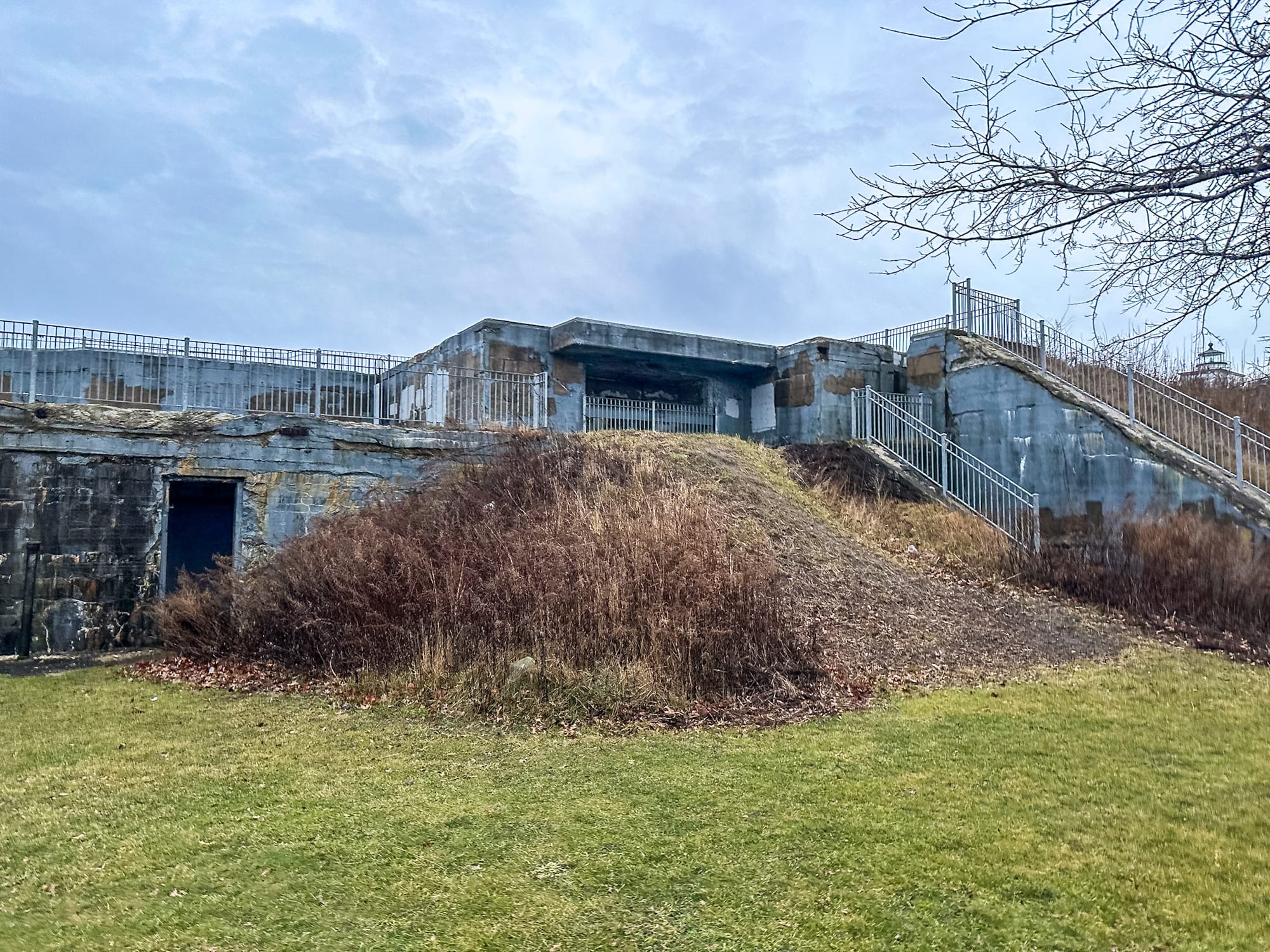
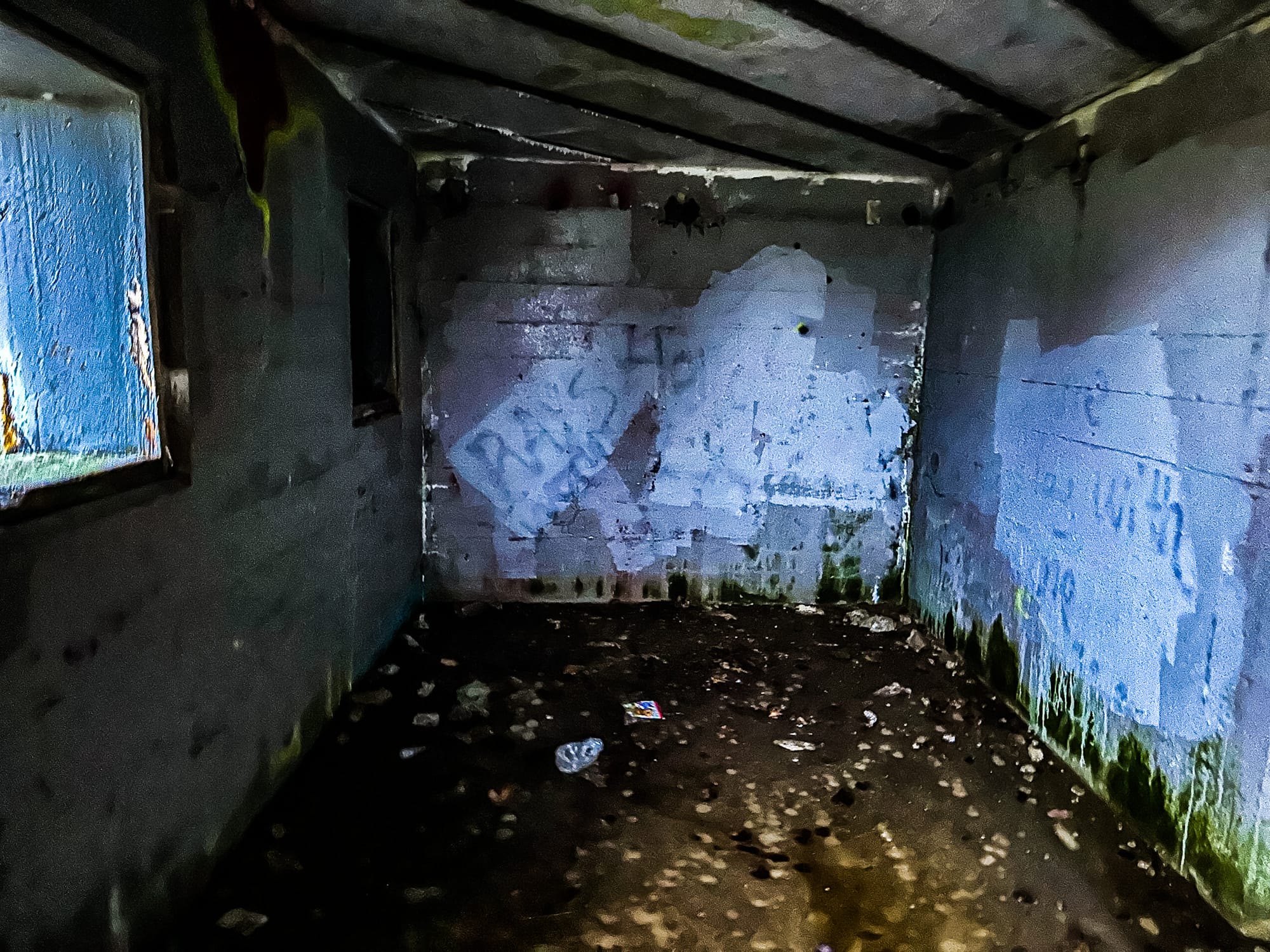
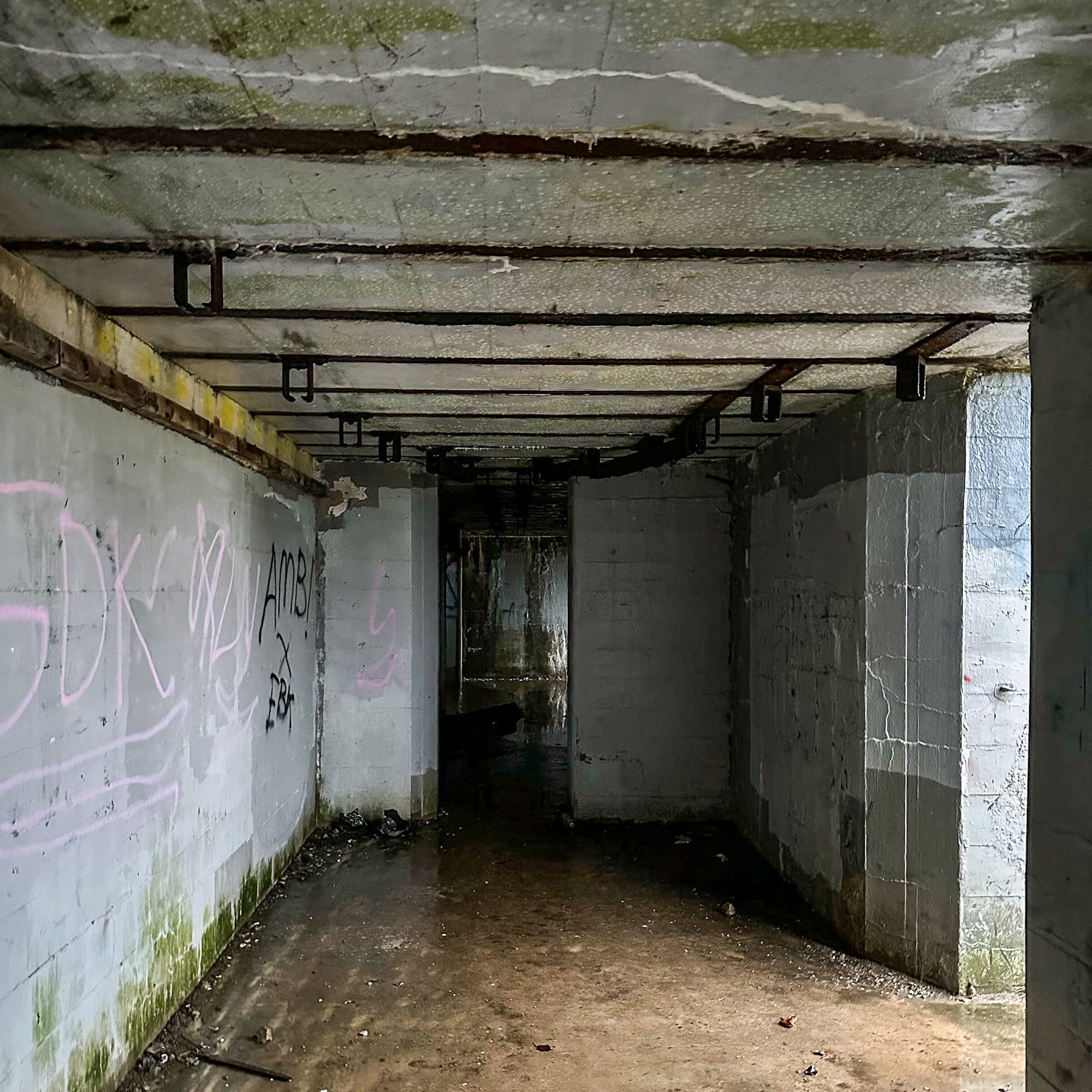
Battery Barton was equipped with a single 8-inch M1888MII gun mounted on an M1896 disappearing carriage. This sophisticated system allowed the gun to retract behind a parapet after firing — shielding it from enemy view and return fire. The two-level design featured a lower magazine for ammunition storage and an upper gun platform where the massive weapon was mounted.
Shells and powder were hoisted using a Taylor-Raymond shell hoist powered by the fort’s central electrical plant — state-of-the-art technology for its time.
The battery was named in honor of Colonel William Barton, a distinguished officer in the Continental Army during the American Revolutionary War, best remembered for his daring capture of British General Richard Prescott in 1777.
World War I
During World War I, many of America’s older seacoast guns were dismantled and repurposed for use on the European front. Battery Barton’s 8-inch gun was ordered for removal on July 18, 1918, but later directives reversed the decision — the weapon remained in place at Fort Rodman until after the war.
Though never seeing combat, Battery Barton remained a key part of New Bedford’s harbor defenses throughout the early 20th century, standing guard against potential threats along the Massachusetts coast.
World War II and Deactivation
By the time World War II erupted, technology had advanced far beyond the capabilities of the Endicott-era batteries. New radar systems, aircraft, and long-range naval guns rendered these stationary fortifications largely obsolete.
In December 1942, the War Department ordered the deactivation and salvage of many of these outdated coastal guns. Battery Barton was officially removed from the Harbor Defenses of New Bedford plan on December 15, 1942, and its 8-inch gun was sent to the Watervliet Arsenal in New York on March 24, 1943.
The carriage was scrapped, and the concrete battery was sealed and abandoned shortly thereafter.
What Remains Today
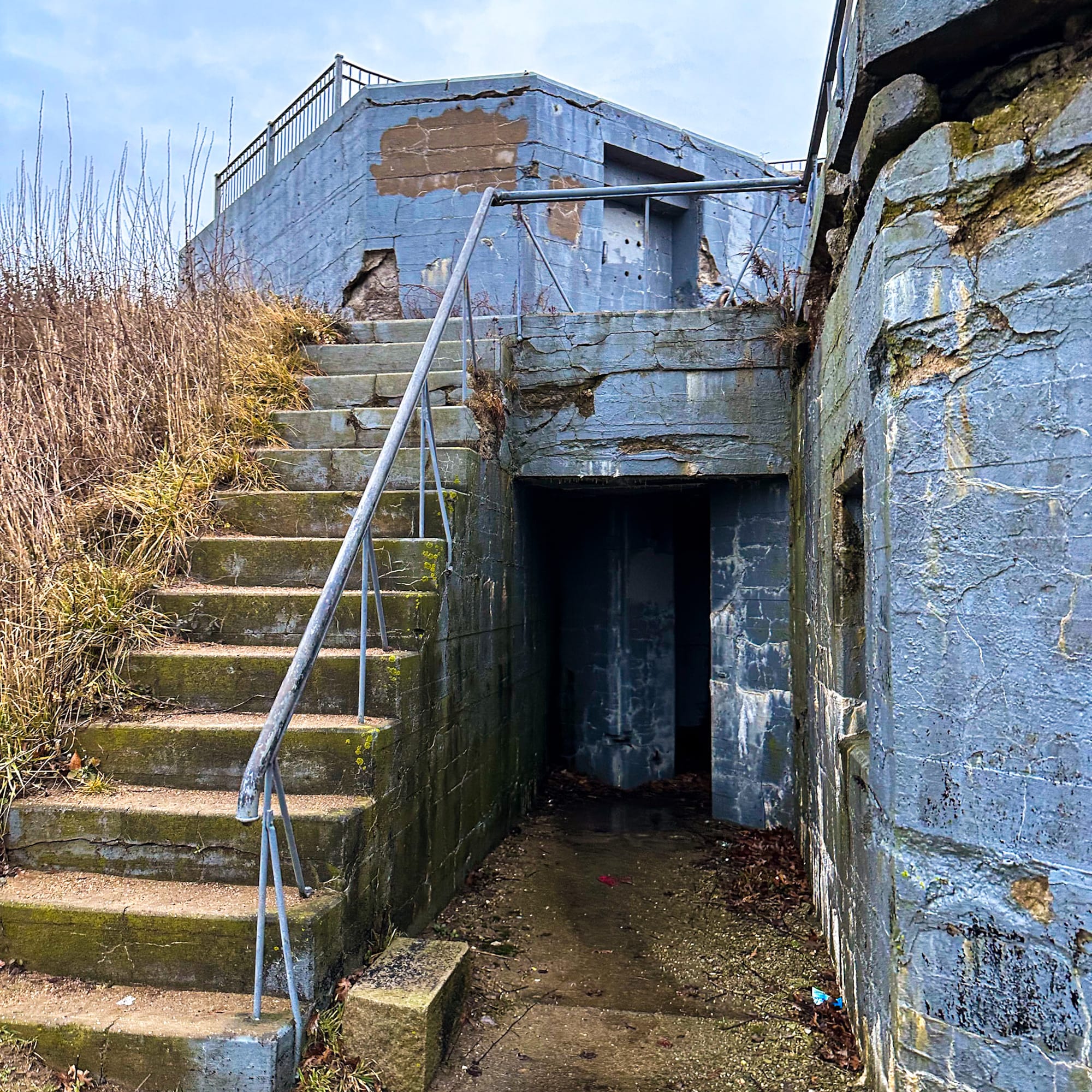
Today, Battery Barton stands as a peaceful, weathered ruin overlooking the waters it once defended. Located within Fort Taber Park, visitors can explore the battery’s exterior — its magazine area, concrete walls, and former gun platform still clearly visible. The steel doors that once led into the interior spaces are now sealed for safety, but the structure’s overall form remains remarkably intact.
Interpretive signs and historic plaques throughout Fort Taber Park help visitors understand the area’s layered history, from the original Fort Rodman stone fort to the later Endicott and World War II defenses.
Battery Barton, along with the rest of Fort Rodman, was added to the National Register of Historic Places in 1973, ensuring its preservation as both a military relic and a coastal landmark.
Visiting Battery Barton
- 📍 Address: 1000 Rodney French Boulevard, New Bedford, Massachusetts
- 🌐 GPS Coordinates: 41.593320, -70.906054
- 🅿️ Parking: Multiple parking lots are available within Fort Taber Park, just a short walk from Battery Barton.
- Off-season: Free parking
- Summer season: $5/day for New Bedford residents, $10/day for non-residents
- 🕒 Hours: Park open daily from sunrise to sunset.
- 🐾 Dogs: Allowed on leash.
- ⚠️ Tip: While the battery’s doors are sealed, visitors can safely walk around the exterior. Bring a flashlight if visiting near dusk to admire the details of the old structure.
Quick Facts
- 🏗 Construction Began: May 1898
- 🧱 Completed: June 1899
- 🧑🔧 Transferred to Service: July 31, 1899
- 🔫 Armament: One 8-inch M1888MII gun on M1896 disappearing carriage
- ⚙️ Shell Hoist: Taylor-Raymond electric lift
- 👤 Named For: Colonel William Barton (Revolutionary War)
- 🔚 Decommissioned: December 15, 1942
- 📜 Listed on National Register: 1973
- 🌊 Location: Fort Taber Park, New Bedford, MA
Final Thoughts
Battery Barton stands as a stoic reminder of the evolution of America’s coastal defense — from the era of the Endicott Board to the dawn of modern warfare. Its silent concrete walls tell the story of an age when New Bedford’s harbor was a key point of defense, guarded by soldiers, searchlights, and massive disappearing guns.
Today, as families picnic, jog, and fish along the same shoreline, the battery remains a quiet monument to the ingenuity and vigilance of the past — a living piece of Massachusetts military history preserved along the edge of the sea.