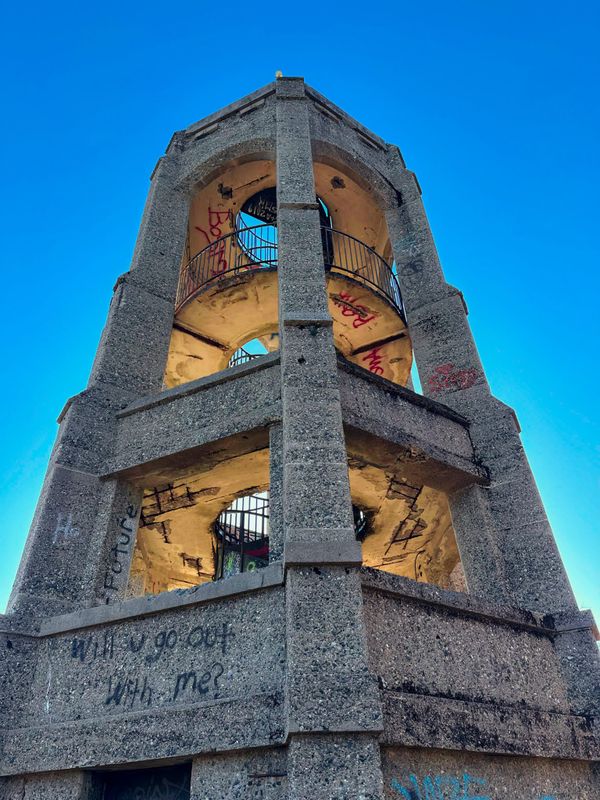
Battery Craig (New Bedford, MA)
Hidden within the windswept shores of Fort Taber Park in New Bedford, Massachusetts, stands the quiet concrete ruins of Battery Craig.

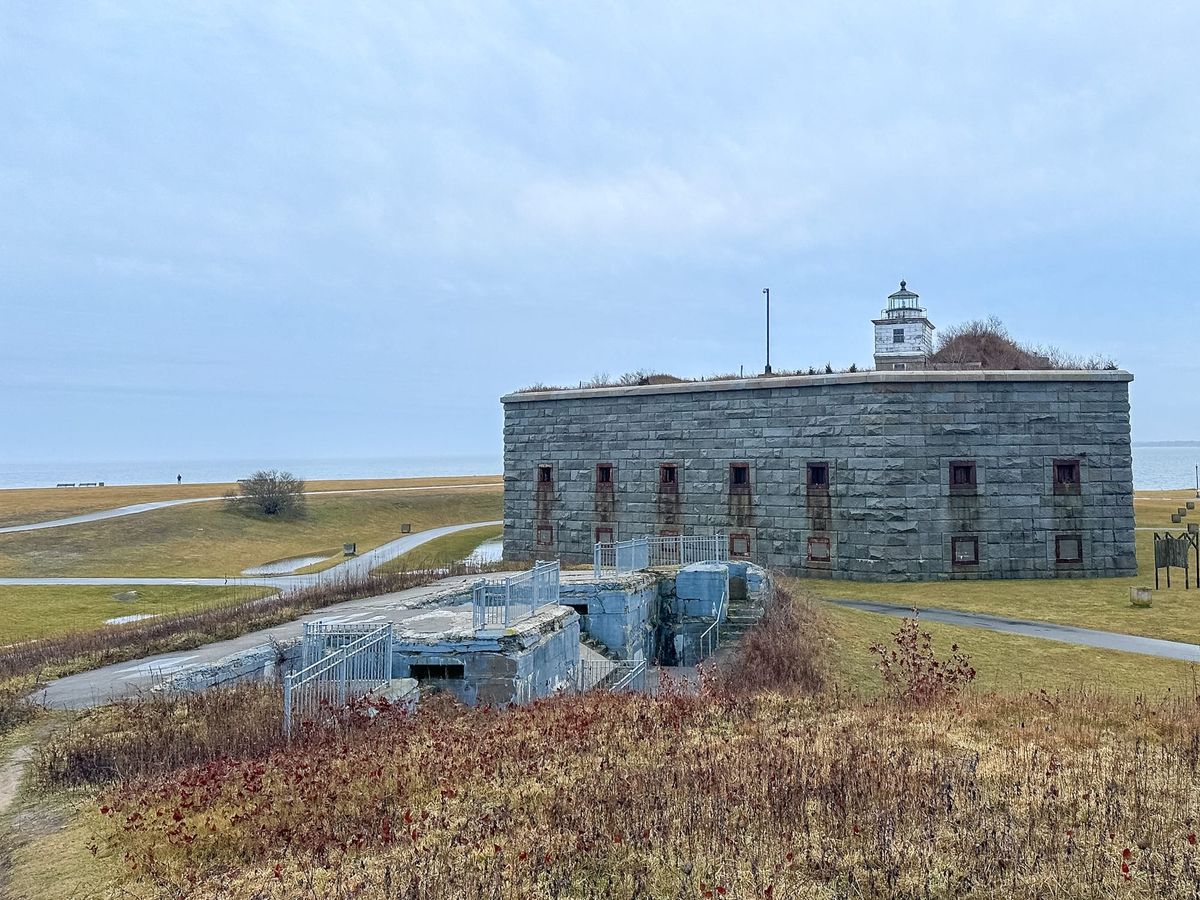
Hidden within the windswept shores of Fort Taber Park in New Bedford, Massachusetts, the quiet concrete ruins of Battery Craig stand as a testament to America’s once-mighty coastal defense network. Built during the Endicott Period, this two-gun battery was part of the U.S. Army’s effort to modernize its harbor defenses at the turn of the 20th century. Though its weapons have long been removed, Battery Craig remains one of the most fascinating historic sites on the South Coast — a reminder of a time when New Bedford’s harbor was a fortified stronghold.
Battery Craig Establishment
By the late 19th century, advances in artillery and naval power had rendered the old brick-and-stone forts of the Civil War obsolete. In response, the U.S. government launched the Endicott Board in 1885, a sweeping modernization program that called for reinforced concrete batteries, underground magazines, and disappearing gun carriages. Between 1890 and 1910, dozens of these batteries were constructed across the country — including several in New Bedford, at what would become Fort Rodman.
The site at Clark’s Point was officially named the Fort Rodman Military Reservation, in honor of Lieutenant Colonel Logan Rodman, a New Bedford native who fought in the 38th Massachusetts Infantry and was killed in 1863 during the assault on Port Hudson, Louisiana.
Battery Craig was among the fort’s smaller defensive emplacements. Construction began in the late 1890s, and the battery was completed and transferred to the Coast Artillery in 1902, officially entering service on December 29, 1902.
It was armed with two 3-inch M1898 guns, each mounted on an M1898MI masking parapet carriage — a type of disappearing mount that allowed the guns to fire over a parapet and then recoil back into a protected position. The design helped shield the crew and equipment from direct enemy fire.
The battery was built with two levels:
- The lower level housed the magazine, which stored ammunition and powder.
- The upper level contained the gun platforms.
Unlike larger batteries, Battery Craig lacked mechanical hoists, meaning ammunition had to be carried by hand up from the magazines to the guns — an exhausting task for the artillerymen stationed here.
In May 1903, the Army officially named the battery after 2nd Lieutenant Presley O. Craig, of the 2nd U.S. Artillery, who was killed in action at the First Battle of Bull Run in 1861 during the Civil War.
Disarmed After World War I
When the United States entered World War I in 1917, many coastal batteries had their guns removed and repurposed for use overseas. While some weapons from Fort Rodman were shipped out, Battery Craig’s guns remained in place throughout the conflict.
However, the post-war disarmament that followed in 1920 led to the battery’s official deactivation. On May 26, 1920, the Army ordered the gun mounts dismantled, and on July 15, 1920, the 3-inch guns were returned to the Watervliet Arsenal in New York.
From that point on, Battery Craig’s active service was over — though it would briefly be brought back into limited use during the next global conflict.
Brief Armament During World War II
When World War II broke out, the Army began reexamining old coastal defense sites for possible reuse. At Battery Craig, a single 3-inch anti-aircraft gun was temporarily mounted on Gun Emplacement #1 to bolster air defenses around New Bedford Harbor.
This was short-lived, however — once newer, radar-guided systems became available, the gun was removed, and Battery Craig was once again left silent.
What Remains Today
Today, Battery Craig sits peacefully within Fort Taber Park, its reinforced concrete structure a century-old relic of New Bedford’s military past. The magazine area, gun platforms, and protective walls remain visible, though all steel fittings and weapons have long been stripped away.
As with other Fort Rodman structures, the interior doors have been sealed for safety, but the exterior is easily accessible for visitors walking along the paved coastal trails. The concrete surfaces are weathered but intact, offering a fascinating look into early 20th-century military engineering.
Battery Craig, along with the rest of Fort Rodman, was added to the National Register of Historic Places in 1973, ensuring its preservation as a historic landmark.
Visiting Battery Craig
- 📍 Address: 1000 Rodney French Boulevard, New Bedford, Massachusetts
- 🌐 GPS Coordinates: 41.593218, -70.904964
- 🅿️ Parking: Multiple parking lots are located within Fort Taber Park.
- Off-season: Free parking
- Summer season: $5/day for New Bedford residents, $10/day for non-residents
- 🕒 Hours: Park open daily from sunrise to sunset.
- 🐾 Dogs: Allowed on leash.
- ⚠️ Tip: The battery is part of the Fort Rodman–Fort Taber Historical District, which features other nearby ruins including Battery Barton, Battery Cross, and the historic Fort Rodman stone fort.
Quick Facts
- 🏗 Construction Completed: 1902
- 🔫 Armament: Two 3-inch M1898 guns on M1898MI masking parapet carriages
- 👤 Named For: 2nd Lt. Presley O. Craig (killed at First Battle of Bull Run, 1861)
- ⚙️ Power Source: None — ammunition carried by hand
- 🔚 Deactivated: 1920
- 🌊 Later Use: Mounted anti-aircraft gun during WWII
- 📜 Listed on National Register: 1973
- 📍 Location: Fort Taber Park, New Bedford, Massachusetts
Final Thoughts
Battery Craig may not boast the size or firepower of the larger Endicott-era fortifications, but its story is no less compelling. It represents an era when America’s coastlines were dotted with small, efficient defenses — silent guardians watching over busy ports like New Bedford.
Today, the battery’s weathered concrete, open views of Buzzards Bay, and proximity to the grand stone walls of Fort Rodman make it a must-see stop for history enthusiasts and explorers alike. A visit here offers a quiet connection to the past — where the echoes of military vigilance still linger on the sea breeze.