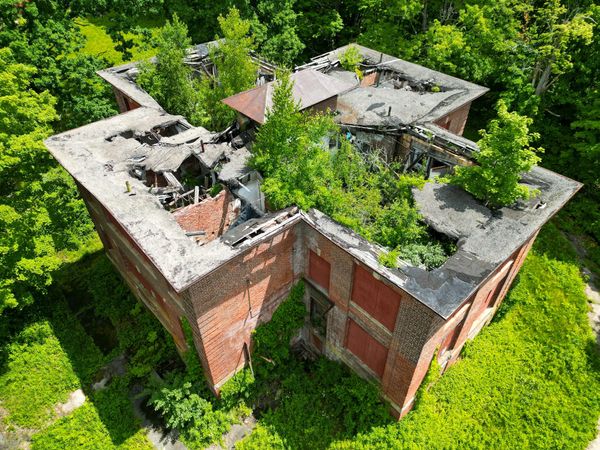
Building 83 (Hingham, MA)
Within Wompatuck State Park in Hingham, Massachusetts, lies one of the last surviving relics of a once-massive military installation — Building 83.

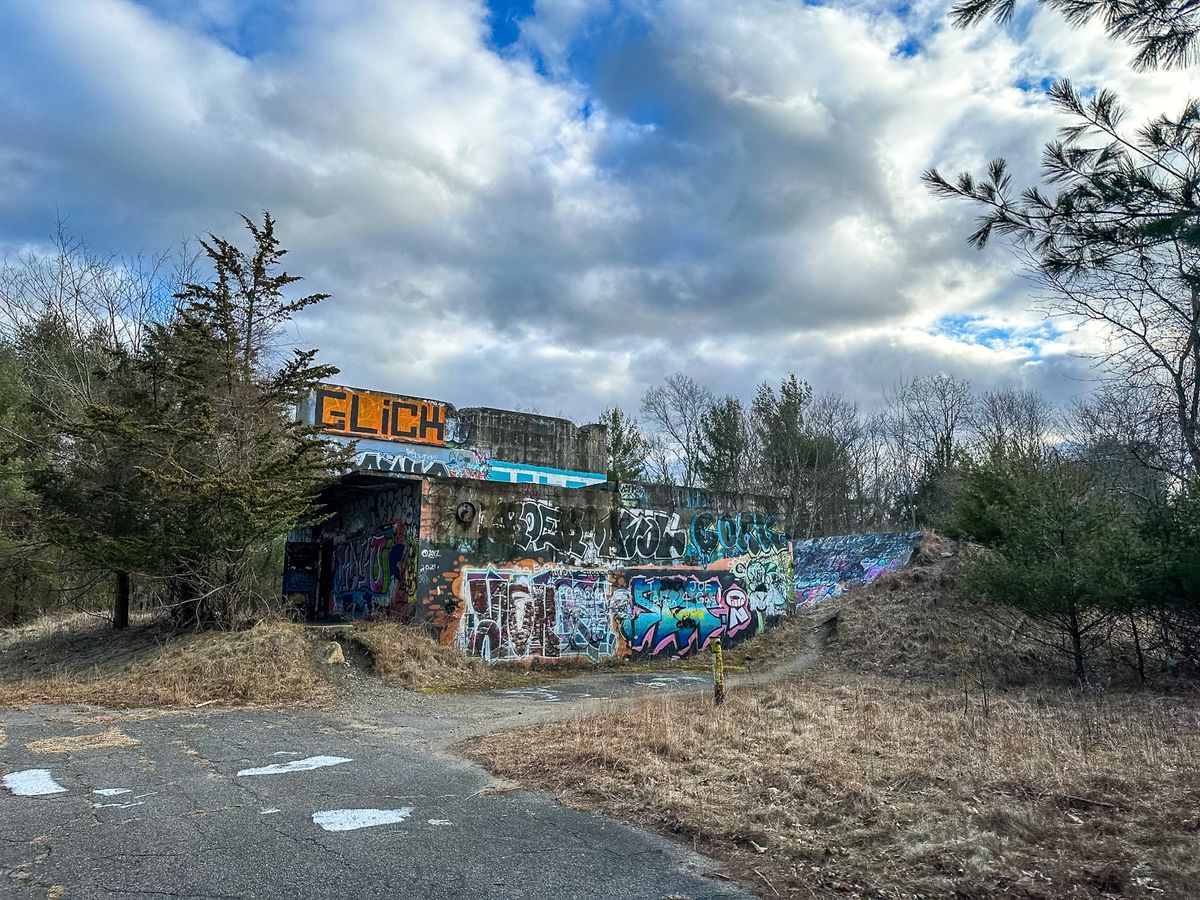
Hidden deep within the forests of Wompatuck State Park in Hingham, Massachusetts, lies one of the last surviving relics of a once-massive military installation — Building 83. Constructed during World War II as part of the Hingham Naval Ammunition Depot Annex, this small, bunker-like concrete structure is a haunting reminder of the area’s classified wartime past.
Though nearly every other building in the annex has long been demolished or buried, Building 83 endures — a solitary outpost whispering echoes of the Cold War and the nuclear experiments that once shaped America’s coastal defenses.
The Hingham Naval Ammunition Depot Annex
In 1941, as the United States prepared to enter World War II, the Navy expanded its Hingham Naval Ammunition Depot, located along the Fore River near the modern-day Hingham Shipyard. The expansion — called the Hingham Naval Ammunition Depot Annex or Cohasset Annex — sprawled across more than 3,500 acres of woodland in Hingham, Cohasset, and Norwell.
Hundreds of local families were displaced as the government acquired the land by eminent domain, transforming the quiet countryside into a heavily secured military base filled with bunkers, rail spurs, and testing buildings.
At its wartime peak in June 1945, the combined Depot and Annex employed over 3,200 personnel — including 2,100 civilian workers, 720 naval officers and sailors, and 380 Marines who guarded the site day and night.
The Annex stored and assembled bombs, depth charges, and naval rockets for the Atlantic Fleet. A railroad spur connected the inland facility to the coastal Depot at the Hingham Shipyard, allowing ammunition to be efficiently moved to ships bound for Europe and the Pacific.
Post-War Use and Nuclear Testing
After World War II, the Annex briefly closed before being reactivated during the Korean War in 1950. It again became a hive of military research and ordnance assembly.
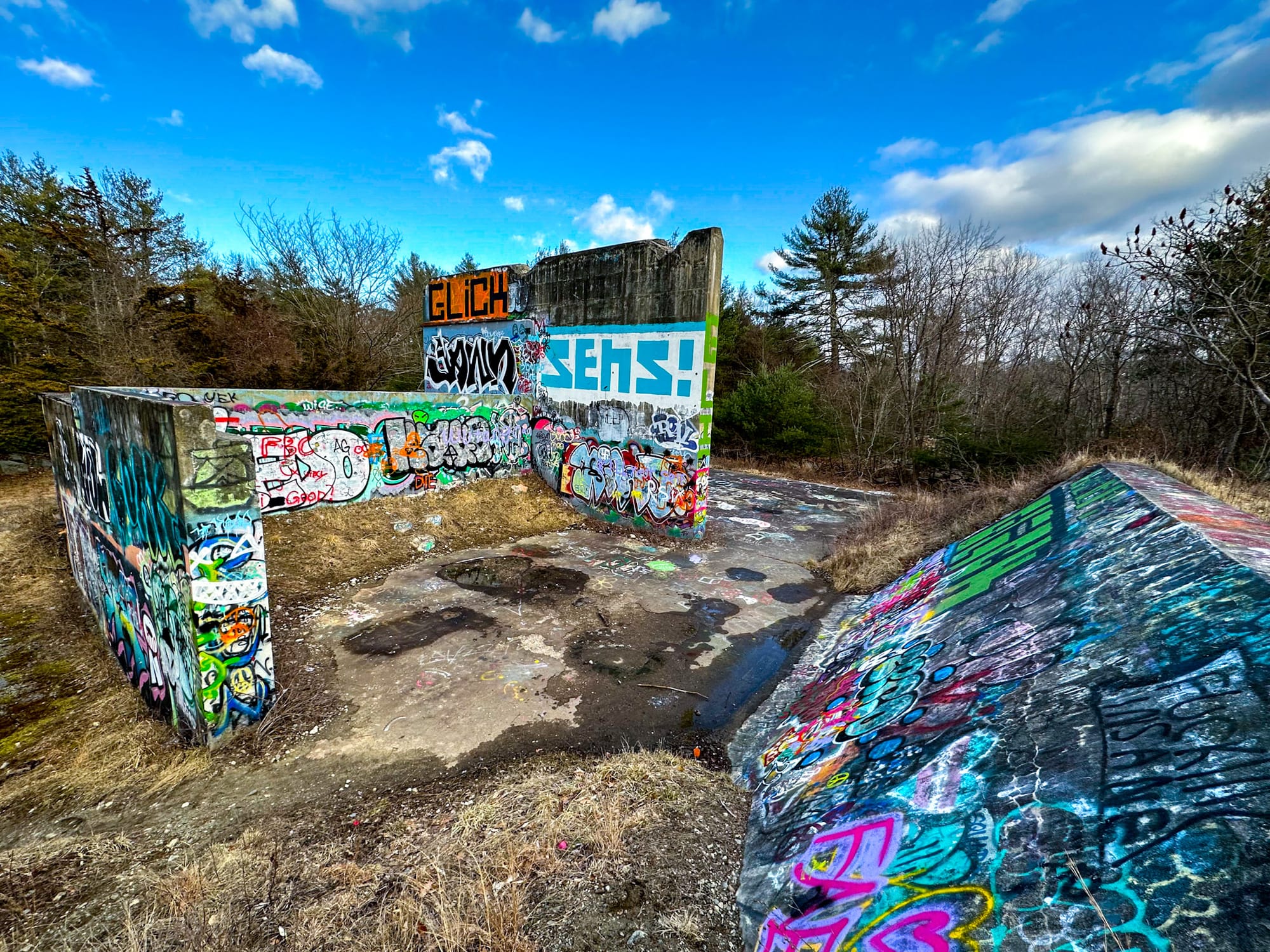
One of the most intriguing chapters in its history occurred during this period — when the Navy used Bunker N9, just north of Building 83, to test an experimental nuclear depth charge. These weapons were designed to destroy enemy submarines deep below the ocean surface.
By the late 1950s, as weapons systems advanced and coastal defenses evolved, the Hingham Depot and its Annex became obsolete. The Navy declared both sites surplus in 1962, and by 1966, the land was transferred to the Commonwealth of Massachusetts. The property was eventually transformed into Wompatuck State Park, one of the largest state parks in eastern Massachusetts.
More than 100 bunkers were filled in, rail lines were dismantled, and nearly all buildings were destroyed. Only a handful of mysterious structures — including Building 83 — were spared.

Building 83: The Survivor
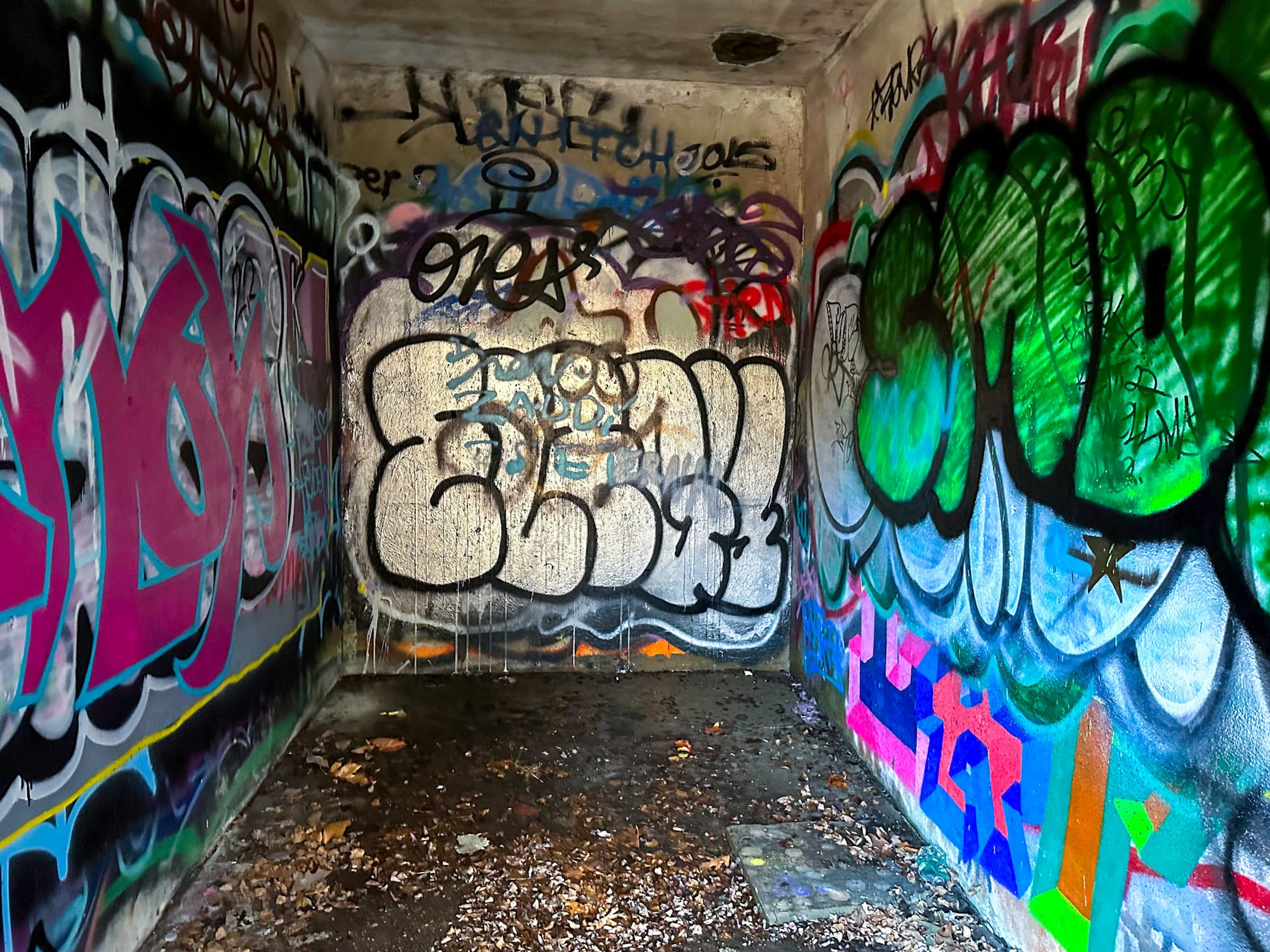
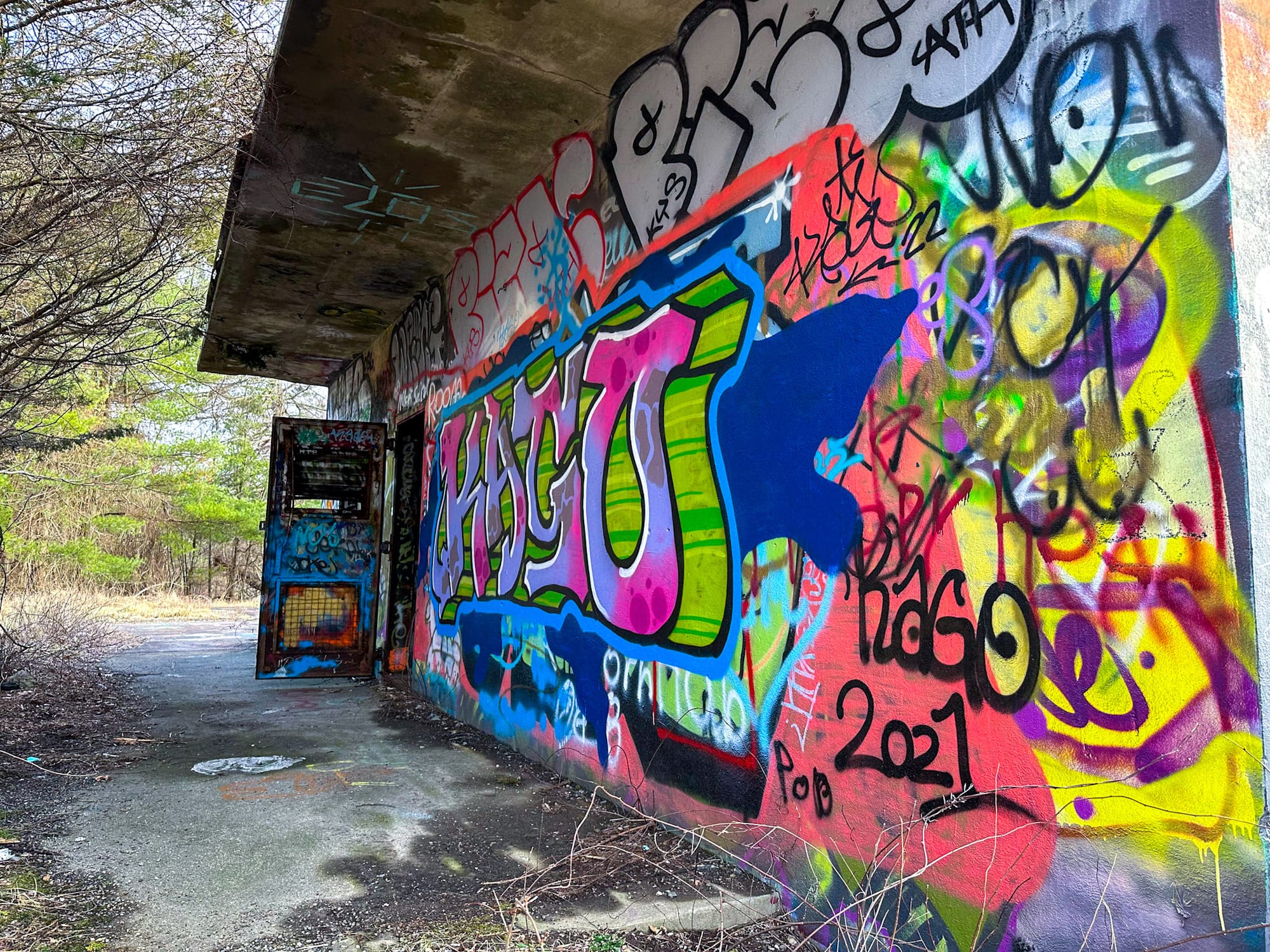
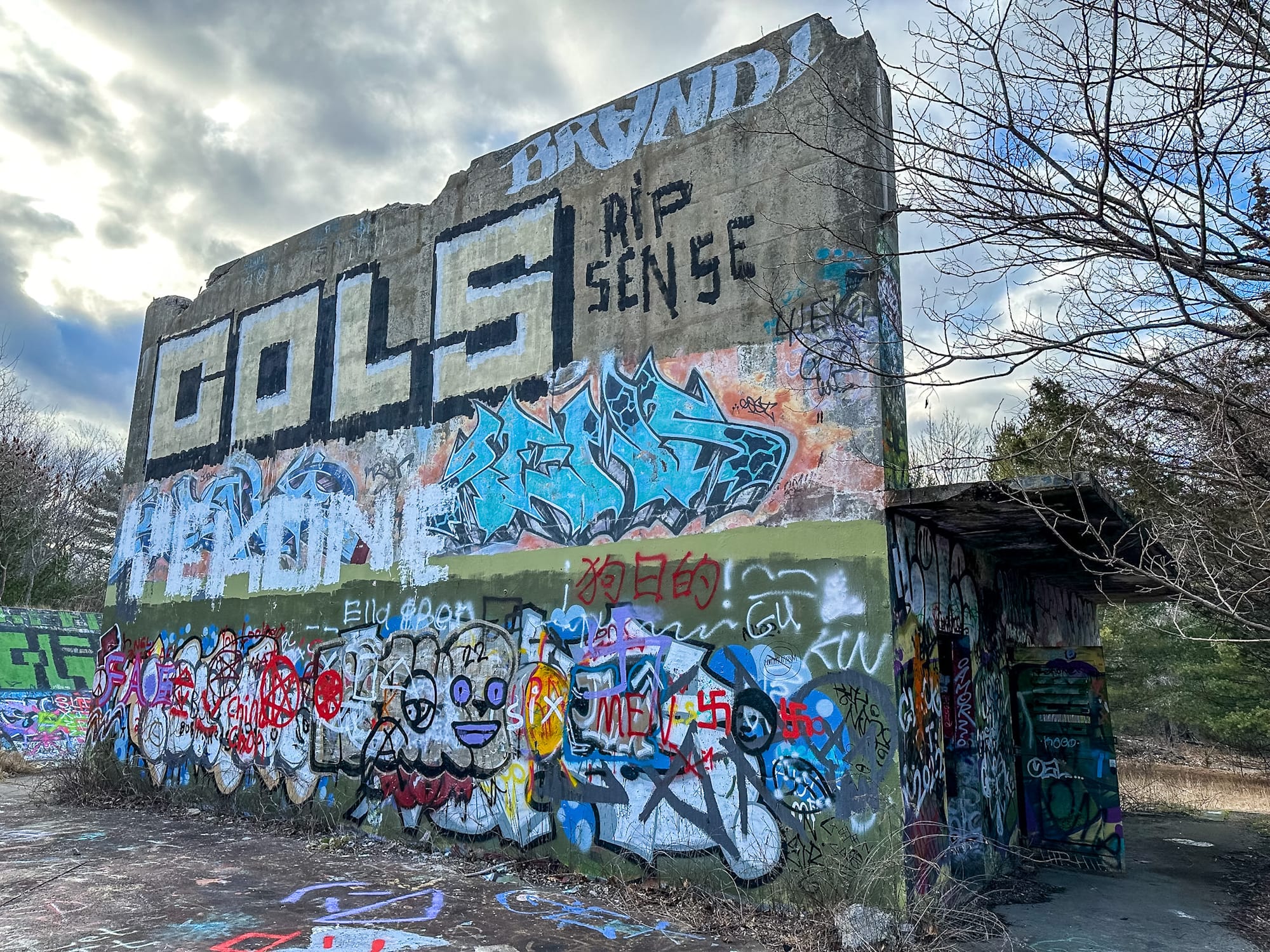
Building 83 stands today as one of the only surviving remnants of the Hingham Naval Ammunition Depot Annex. Built of reinforced concrete, the squat rectangular structure likely served as a support facility for the missile-testing operations conducted nearby.
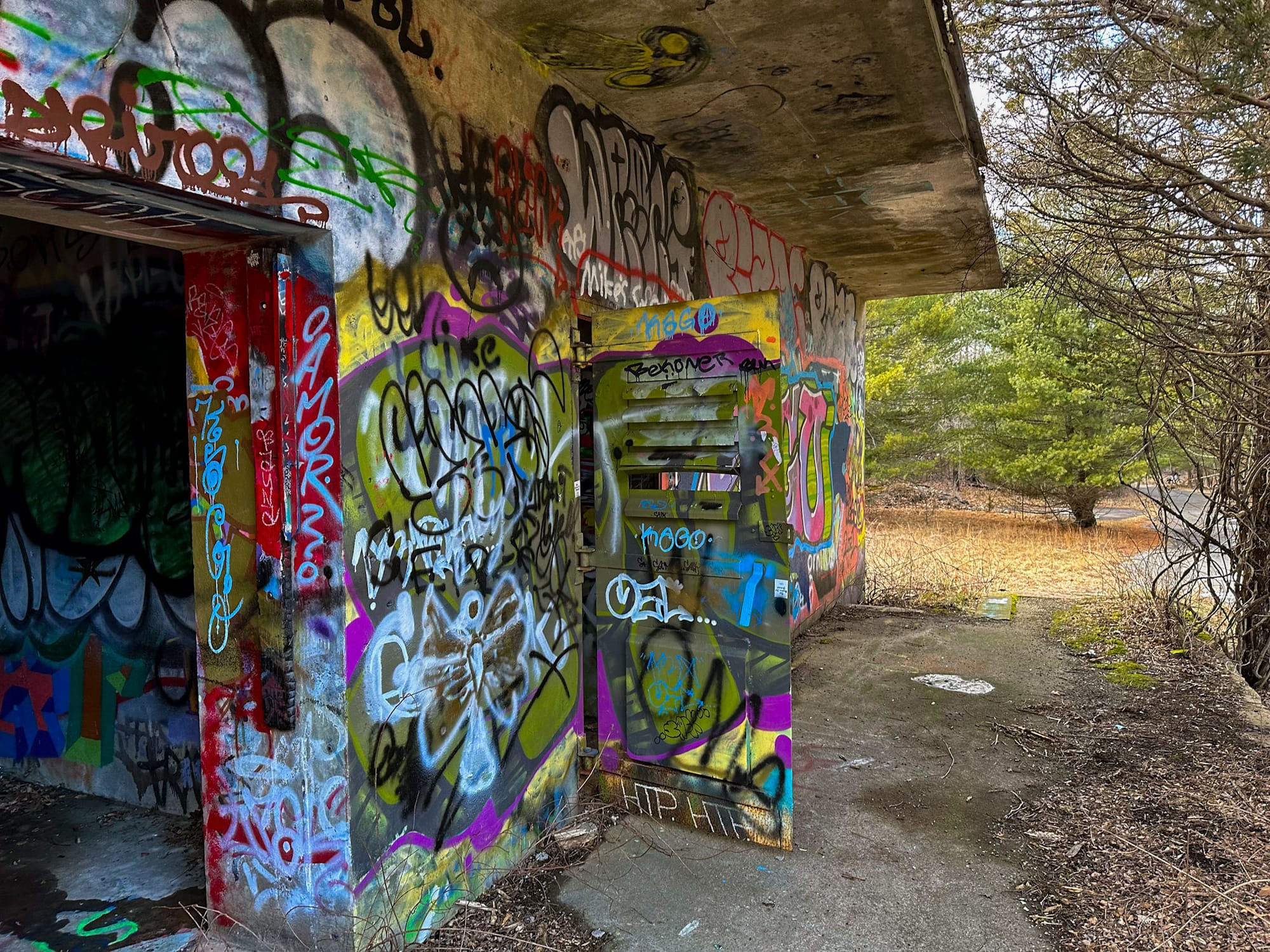
The building contains two heavy steel doors, leading to small windowless rooms — one side divided into two chambers, the other into a single narrow space. While its exact function remains uncertain, evidence suggests it was part of the missile assembly and loading area, possibly housing control equipment or explosive components.
Just steps from the building, visitors can still spot fragments of old railroad tracks embedded in the ground — remnants of the narrow-gauge lines that once transported ammunition and rockets through the dense forest.
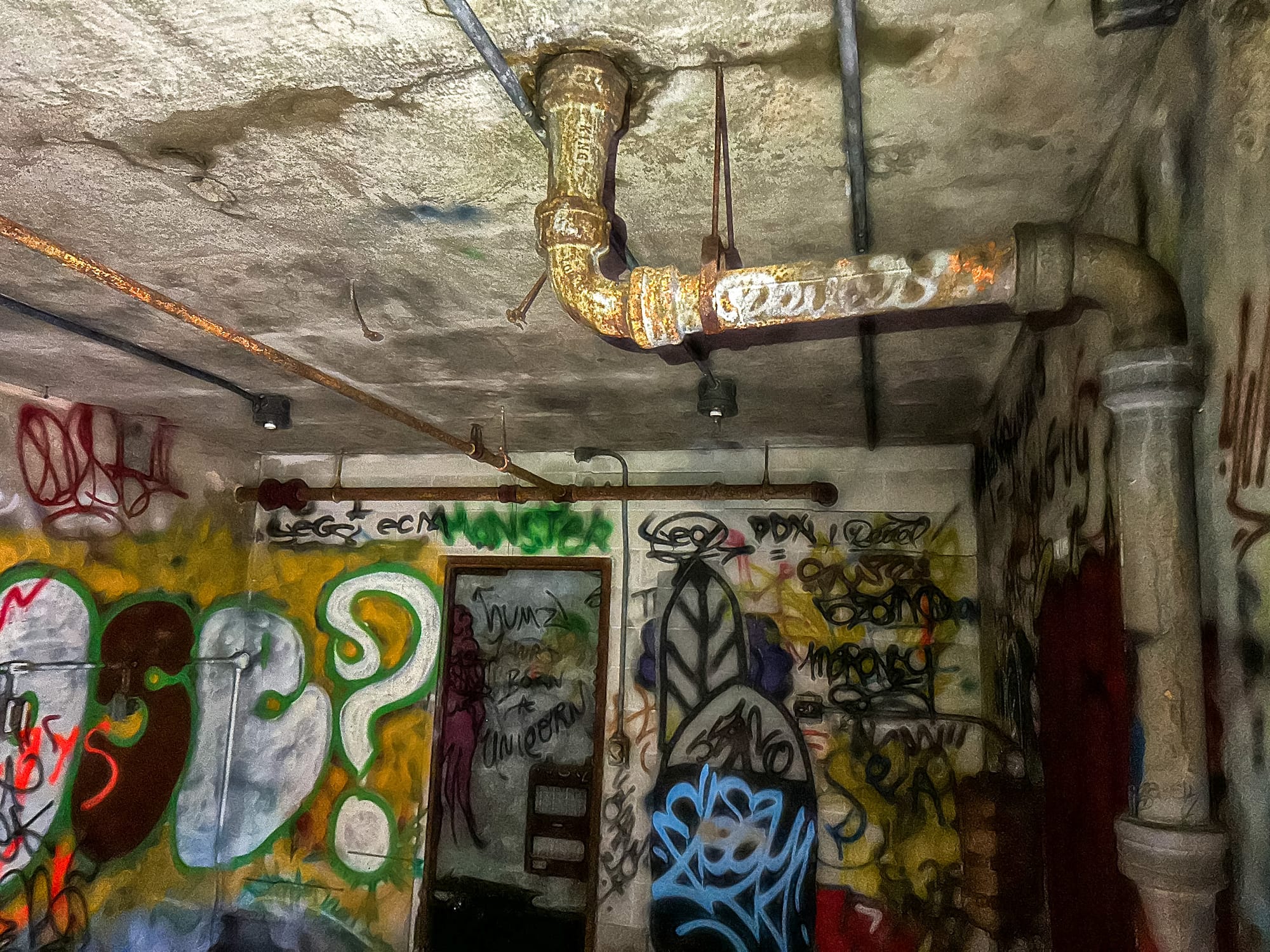
Unlike most structures in the Annex, Building 83 was never demolished, perhaps because of its thick construction or remote location. Today, it stands covered in graffiti, its concrete slowly crumbling — but still remarkably intact.
Exploring Building 83 Today
Reaching Building 83 is an adventure best suited for curious hikers and history buffs. The structure isn’t marked on most official maps, but it remains accessible via a short trail from the park’s main entrance.
- 🚶♂️ Trail Length: ~1.4 miles round trip
- 🟢 Difficulty: Easy
- 📈 Elevation Gain: Minimal
- 🐕 Dogs: Welcome on leash
To find it:
Park at the Wompatuck Visitors Center on Union Street and follow the Fire Road Trail until you see a sign marked “N34.” Turn left onto the N34 Trail and continue a few hundred yards — Building 83 will appear on your right, tucked just beyond the tree line.
Please be respectful while exploring. The building is fragile, and while it’s open to view from the outside, entering is discouraged for safety reasons.
Quick Facts
- 🏗 Year Established: 1941
- 🧨 Original Purpose: Missile test facility support building
- 🚫 Abandoned: 1962
- 🧱 Construction: Reinforced concrete
- 📍 Location: Wompatuck State Park, Hingham MA
- 🌐 GPS: 42.218122, -70.849914
- 🅿️ Parking: Free lot at Wompatuck Visitors Center (Union Street trailhead)
Final Thoughts
Few visitors hiking through Wompatuck State Park realize they’re walking atop what was once a major U.S. Navy ammunition base. Today, the forest has reclaimed most of the Annex — its bunkers buried and tracks long forgotten — but Building 83 endures as a tangible piece of Cold War history.
It’s a quiet, eerie reminder of Massachusetts’ secret military past — a place where science, secrecy, and power once intersected in the depths of New England woods.
Whether you’re a historian, photographer, or urban explorer, a visit to Building 83 offers a rare glimpse into a chapter of American history that nature has all but erased.